
Japan’s Nikkei 225 has fallen more than 20% from its June peak, entering bear-market territory. But weeks before the latest selloff, Elliott Wave International’s analysts were already warning that the advance had turned vulnerable.
What EWI Was Saying on October 2:
On October 2, EWI highlighted two warning signs: Japan’s Leading Index of Business Cycle Indicators had reached an extreme associated with previous important market peaks, while the Nikkei’s Elliott wave pattern suggested a decline was already underway.
As EWI told subscribers:

“The Nikkei 225 Index continues to trade below both its upper channel line and its June high in the early stages of wave 4 down.”
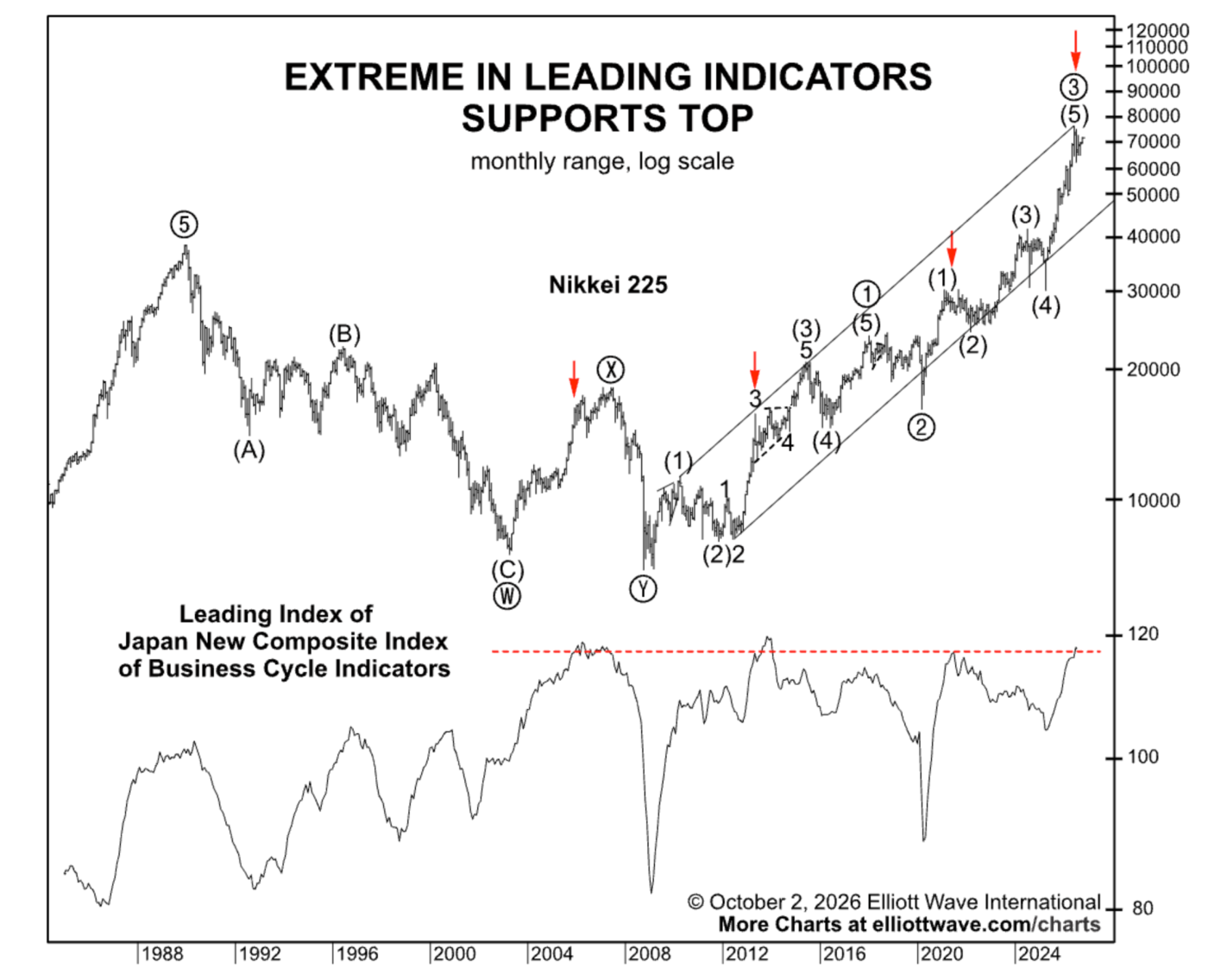
The chart’s message was equally direct: “EXTREME IN LEADING INDICATORS SUPPORTS TOP.”
Then Came the Bear Market
By November 20, the Nikkei had fallen to 56,436.65, roughly 22% below its June closing high and 20% below its October closing high.
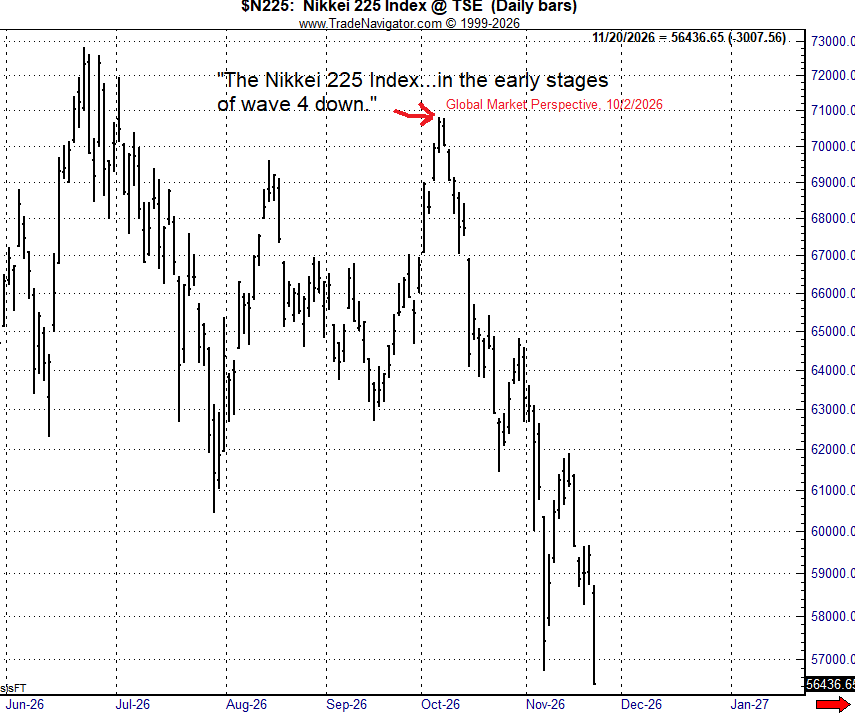
The significance of the October analysis is straightforward: The technical evidence was pointing lower before the latest selling pushed the Nikkei into a bear market.
What Is the Nikkei Telling Investors Now?
The question now is whether the decline is nearing its end or has further to run.
Global Market Perspective provides monthly Elliott wave analysis and forecasts for more than 50 financial markets worldwide.

For more frequent coverage of markets across the region, Asian-Pacific Short Term Update provides timely Elliott wave analysis and forecasts of key Asian-Pacific stock indexes.